What is a PTZ camera
In the world of video conferencing, streaming and professional audiovisual production, PTZ cameras have become an essential tool. But what exactly is a PTZ camera and what advantages does it offer over other solutions? In this article we explain everything you need to know.
What does PTZ mean?
The name PTZ is an abbreviation for the 3 main characteristics of a camera capable of pan, tilt and zoom movements separately (PAN/TILT/ZOOM).
- Pan: Horizontal rotation of the camera.
- Tilt: Vertical movement of the lens.
- Zoom: Zoom in or out of the image without loss of quality (in optical models).
In addition to these 3 main features, there is a fourth one due to their remote control ability, which makes them highly configurable and versatile cameras that can be easily controlled by multiple people from a single PTZ controller (console).
What is a PTZ camera used for?
PTZ cameras are used in a wide range of situations, from domestic to professional including:
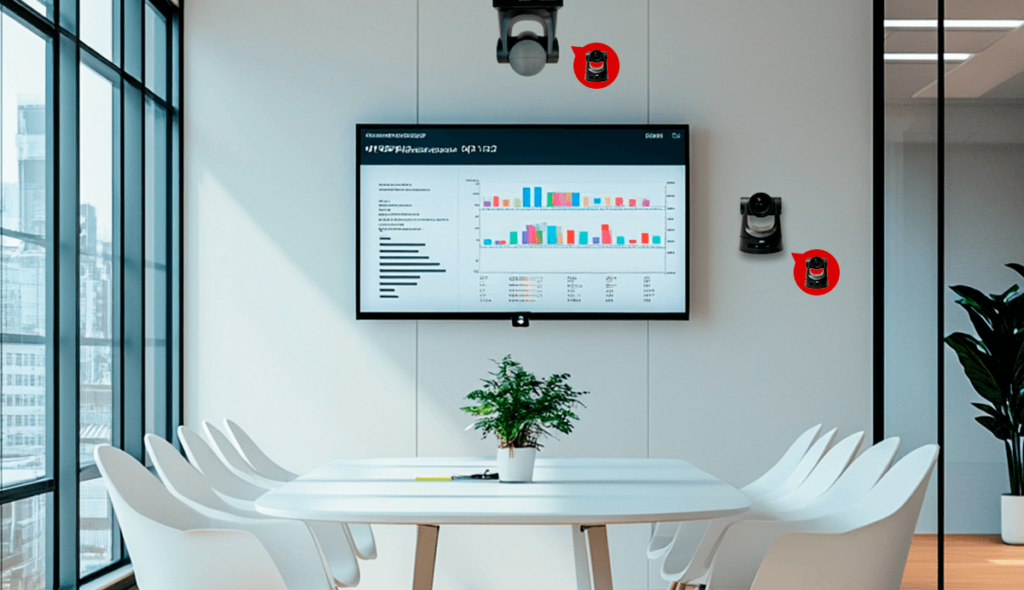
- Videoconference rooms: To capture all participants in small, medium or large rooms.
- Live and streaming events: such as concerts, seminars, masses, plays or webinars.
- Hybrid education: In universities and schools that offer face-to-face and virtual classes.
- Media and audiovisual production: For live broadcasts with professional quality.
Advantages of PTZ cameras
- Remote control
One of the biggest benefits is the ability to control them remotely, either from a remote control, software or even a mobile app. This saves on technical personnel and facilitates production in complex environments.
- Professional image quality
Modern PTZ cameras, such as Broadcaster Pro series, offer 4K@60fps resolution, autofocus, and technologies like NDI, which ensure smooth, low-latency streaming.
- Discreet and versatile installation
They are quiet, compact in design and can be wall or ceiling mounted, making them blend perfectly into any space, without interfering with the aesthetics of the environment.
- Easy integration
Professional PTZ cameras are often compatible with video conferencing systems such as Microsoft Teams, Zoom, Google Meet, Webex and goFacing, and are easily integrated into AV environments thanks to connections such as HDMI, USB, SDI or IP.
Which PTZ camera to choose?
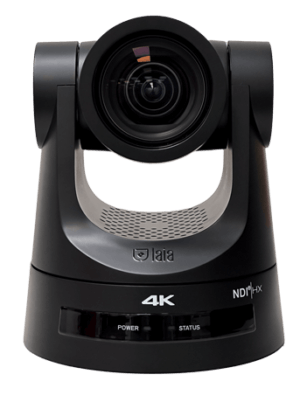
When choosing a PTZ camera, it’s important to consider factors such as the optical zoom range, the type of connection (USB, HDMI, SDI, IP, NDI), image quality (Full HD or 4K), and compatibility with the platforms you typically use, such as Zoom, Microsoft Teams, or production software like OBS or vMix. For example, if you’re looking for a professional solution for live streaming, a PTZ camera with 3G-SDI output and NDI protocol, such as the Laia Broadcaster Pro NDI 3G, is ideal. On the other hand, for small meeting rooms, a plug-and-play USB PTZ camera like those in the Laia C-Pro series may be the simplest and most efficient option . The key is that the camera adapts to the specific environment and needs of each user or installation.
Want to know more?
At Laia we offer audiovisual solutions adapted to every professional environment. If you are looking for a PTZ camera that fits your videoconferencing, education, production or streaming needs, we invite you to visit our website. Discover all our models, compare specifications and find the perfect option for your installation. Go to laiatech.com and let yourself be advised by experts in audiovisual technology.